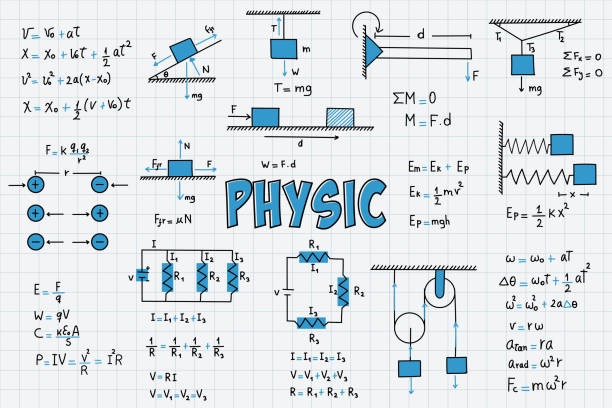
Physics is a fundamental subject in the West African Examinations Council (WAEC) syllabus, and students preparing for the examination often seek to understand the common topics covered in past questions. Analyzing these recurring themes can significantly aid candidates in focusing their studies and improving their performance. One of the most frequently tested areas is mechanics, which deals with motion, forces, energy, and momentum. Questions on kinematics typically require students to calculate velocity, acceleration, displacement, or time using given data or graphs. Dynamics problems often involve applying Newton’s laws of motion to determine forces acting on objects under various conditions.
Energy concepts are also central within mechanics-related questions. Candidates may be asked to solve problems involving work done by a force, kinetic energy changes during motion, potential energy variations due to height differences, or power calculations when machines operate at certain efficiencies. Momentum conservation principles commonly appear as well; these include collision scenarios where total momentum before and after impact must be analyzed.
Another major topic area is waves and oscillations. Students are expected to understand wave properties such as frequency, wavelength, amplitude, speed of propagation and how they relate mathematically. Sound waves are frequently examined Physics waec past questions through questions about pitch variation with frequency changes or intensity related to distance from a source. Simple harmonic motion problems might require calculating period or maximum velocity for oscillating systems like pendulums or springs.
Electricity forms an essential portion of WAEC Physics exams too. Basic electric circuits featuring resistors arranged in series or parallel configurations regularly test knowledge on current flow rates and voltage drops across components using Ohm’s law and Kirchhoff’s rules. Questions may extend into electromagnetism by asking about magnetic fields generated by currents or forces experienced by charged particles moving within magnetic fields.
Thermodynamics topics appear less frequently but remain important for comprehensive coverage of physics principles. Heat transfer methods-conduction, convection and radiation-are sometimes addressed alongside temperature change calculations using specific heat capacity formulas.
Optics has become increasingly prominent over recent years as well; light refraction through lenses causes image formation challenges that candidates must solve using lens formulae relating object distance, image distance and focal length values accurately.
Finally chemistry-related physics concepts such as nuclear physics occasionally surface but tend not to dominate exam papers consistently compared with classical mechanics or electricity sections.